
Where the water comes from
Rural property in Costa Rica usually gets drinking water in one of three ways: from AyA, the national water and sewer institute; from a community water association, known as an ASADA, which runs a local aqueduct with AyA's support; or from a private well on the land. Each comes with its own paperwork. With AyA or an ASADA, the key document is a water availability letter (carta de disponibilidad) for the property. Municipal building-permit checklists commonly ask for it, and the exact list varies by canton, so confirm it with the local municipality. With a well, you need to know its legal status and whether the water is safe to drink.
Well water: the permit to use it
Groundwater in Costa Rica is managed by the Dirección de Agua (Water Directorate) of the Ministry of Environment and Energy (MINAE). Drilling needs a permit, and depending on the type of well and how the water is used, the Directorate requires the well to be registered and a water-use permit (in Spanish, a concesión de aprovechamiento de agua). Its groundwater procedures cover new permits, renewals and transfers to a new owner.
Before you buy land with a well, ask the seller for:
- The well's file number at the Dirección de Agua and the permit to use the well, or its registration.
- Whose name the permit is in and what use it covers: one home, several homes, irrigation or a business.
- Whether the permit is current and whether it can be transferred to you.
- A recent laboratory analysis of the water.
Your lawyer can check the file with the Directorate. A well without papers can mean extra cost and delay, so factor that in before you sign.
Water quality: what a lab test should show
Costa Rica's drinking-water standard is the Reglamento para la Calidad del Agua Potable (Executive Decree 38924-S). It sets maximum limits for physical, chemical and microbiological parameters and applies to every public or private water supplier; the Ministry of Health oversees it. For a private well, a lab report compared against that standard tells you whether the water is safe as it comes out of the ground or needs filtering or disinfection. Ask whether the lab is accredited by the Ente Costarricense de Acreditación (ECA), and consider a second test after the rainy season.
Electricity
Power is distributed by ICE, the state utility, and by several regional distributors, including municipal companies and rural cooperatives. ARESEP, the public services regulator, sets electricity and water rates. On rural land, check:
- Whether a power line runs along the road or inside the property, and how far the nearest pole is from where you plan to build.
- Whether the line is single-phase or three-phase, if you plan a larger home, a pool pump or a small project.
- Who pays to extend the line and install the meter. Ask the distributor for a written estimate.
Internet and phone
Internet options change from street to street: fiber or cable where the network reaches, fixed wireless, and mobile data. SUTEL regulates the providers. Before you buy, ask two or three providers to confirm service at the exact property, and test the mobile signal on site with your own phone, including inside any existing building.
Utility checklist before you buy
| Service | Who provides or regulates it | What to ask for |
|---|---|---|
| Piped water | AyA or the local ASADA | Water availability letter for the property |
| Well water | Dirección de Agua (MINAE) | Well file, water-use permit, holder and transfer |
| Water quality | Decree 38924-S, Ministry of Health | Recent lab analysis, ideally from an ECA-accredited lab |
| Electricity | ICE or the regional distributor; ARESEP sets rates | Nearest pole, line type, connection estimate |
| Internet | Private providers; SUTEL regulates | Written confirmation of service at the address |
| Road access | Survey plan and Registro Nacional | Frontage on a public road or a registered right of way |
| Wastewater | Your engineer, through the building permit | A septic design suited to the soil and slope |
What this looks like on a real property
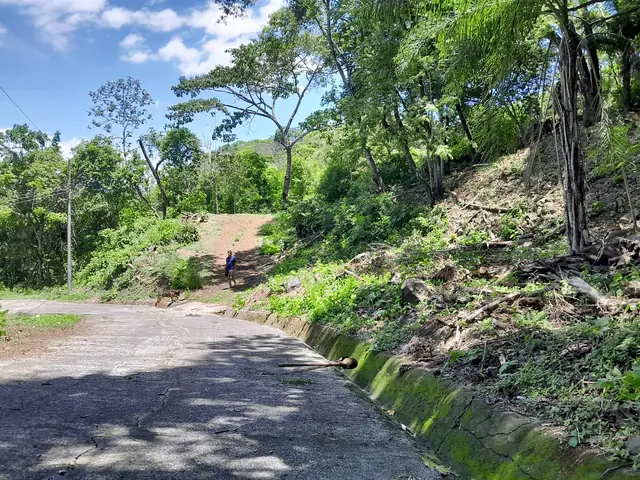
At Finca Valle Verde in Atenas, for example, the property has its own well with piping and a laboratory water analysis, power with street lighting, and paved and cobblestone internal roads with gutters. Connections for each lot and permit details are things to ask us directly, and your lawyer should review the documents either way. The lots page lists the seven lots, and the FAQ answers common questions about utilities. When you are ready to plan a house, our guide to building a home in Costa Rica covers permits, and the due diligence guide explains what your lawyer checks.
Sources
- Dirección de Agua (MINAE)
- Dirección de Agua: concesión de aguas subterráneas (formularios)
- Reglamento para la Calidad del Agua Potable, Decreto 38924-S (SCIJ)
- Ministerio de Salud: calidad del agua potable
- Instituto Costarricense de Acueductos y Alcantarillados (AyA)
- Instituto Costarricense de Electricidad (ICE)
- Autoridad Reguladora de los Servicios Públicos (ARESEP)
- Superintendencia de Telecomunicaciones (SUTEL)
- Ente Costarricense de Acreditación (ECA)
Last reviewed 2026-11-18.