
Who is coming
Costa Rica ranked third in International Living's Global Retirement Index 2026, as reported by The Tico Times. That visibility brings two groups a developer should design for: retirees who move while they are active and want independent living with services nearby, and families looking for long-term care for a parent, sometimes a parent who already lives in the country.
Costa Rican law defines an older adult as anyone aged 65 or more, and anyone with Down syndrome over 40 (Law 7935, as amended in 2022). That is the population the care regulations protect.
What residents and families look for
- Hospitals within a short drive, public and private.
- An international airport nearby, so family can visit often.
- A mild, dry climate and outdoor space that is safe to walk.
- Barrier-free buildings: no steps, wide corridors, ramps with gentle slopes.
- Clear licensing, so families can check that the home is authorized.
- Staff who speak English, for residents from North America and Europe.
Who regulates elder care
Under Law 7935 (Integral Law for Older Adults), the Ministry of Health grants the accreditation that establishments and programs for older adults need to operate (Article 18). The national council for older adults, CONAPAM, keeps a registry of the people and organizations accredited by the Ministry, takes part in accreditation processes and can recommend withdrawing a license (Article 35).
The specific standard is the Norm for the habilitation of long-stay homes for the comprehensive care of older adults (Executive Decree 44730-S, 2024), amended by Decree 45737 in March 2026. It applies to public, private and mixed homes, for profit or not, whether they apply for the first time or renew, and it works together with the Ministry's general permit regulation (Decree 43432-S). It replaced the 2012 regulation; homes licensed under the old rules must adapt before renewing.
The norm defines a long-stay home as a place where older adults live permanently, with any level of independence, and where their daily needs (housing, food, recreation, company) are covered. If your project is independent living with optional services, confirm with the Ministry of Health in writing which permit applies before you design.
Key standards that shape the design
| Area | What the norm requires |
|---|---|
| Direct-care staff | One person for every 10 residents, during all operating hours |
| Nursing lead | A nurse with a gerontology specialty as technical lead, on site at least 8 hours a day |
| Kitchen staff | One cook for every 30 residents, with an extra helper above 60 residents |
| Access to professionals | Psychology, nutrition, physical and occupational therapy, social work, general medicine, geriatrics and dentistry |
| Bedrooms | 3.5 m² per bed (about 38 sq ft); no bunk beds |
| Toilets | One per 10 residents by sex, plus one for staff and one for visitors |
| Corridors | Main routes to exits at least 120 cm wide; secondary routes at least 90 cm |
| Ramps | Required for any change of level; 10–12% slope for runs under 3 m, 8–10% from 3 to 10 m, 6–8% over 10 m |
| More than one floor | Access to each floor by compliant ramps, elevators or platform lifts |
The norm also lists required areas: administration, social and recreational space, consultation rooms, medication preparation, therapy, a kitchen with separate stages, laundry, cleaning storage and staff changing rooms. Kitchen and laundry can be outsourced to a licensed provider.
What drives operating cost
Developers often ask about the cost of assisted living in Costa Rica. The norm itself explains much of it: staffing ratios around the clock, a nurse with a gerontology specialty as technical lead, access to a full team of professionals, and buildings that must stay in good condition to keep the license. Single-level layouts on gentle ground reduce the need for elevators; outsourcing kitchen or laundry to licensed providers is allowed and changes the space program. Model those choices before you fix a price for residents.
What the land needs
Those standards translate directly into site criteria:
- Gentle ground or room to spread out. Ramps at 6–8% over long runs and single-level layouts need space; steep sites force elevators and cost more to operate.
- Reliable water and a wastewater solution. If water comes from a well, plan for the water-use permit from the Dirección de Agua and regular laboratory analysis.
- Power and road access suitable for ambulances and deliveries.
- Short drive times to hospitals, because the norm requires access to doctors and specialists.
- Zoning that allows the use. The municipal land-use certificate is required under Law 4240, Article 28.
- Environmental clearance. Projects need environmental viability from SETENA, and the Forestry Law protects strips along rivers and limits land-use change in forest.
Development path, step by step
- Define the model: independent living, long-stay care, or both on one site.
- Confirm with the Ministry of Health which permit applies to each part.
- Get the land-use certificate from the municipality.
- Run due diligence on title, survey plan, water and environmental limits.
- Design with licensed Costa Rican architects and engineers, following the norm from the first sketch.
- Obtain environmental viability and construction permits.
- Build, hire staff to the required ratios and apply for habilitation.
Where Atenas fits
Atenas offers what families ask about first: the CCSS Hospital San Rafael de Alajuela about 19 to 33 minutes away, a private hospital in Escazú about 27 to 31 minutes, and Juan Santamaría airport about 21 to 31 minutes, without traffic. The IMN describes the area's climate as dry with a marked Pacific influence.
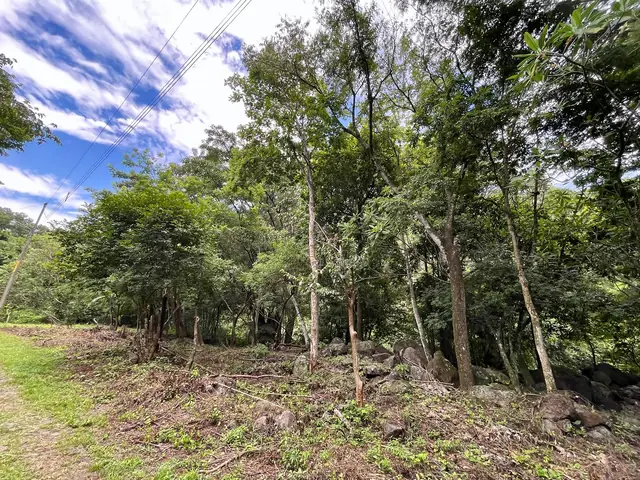
Finca Valle Verde, in Concepción de Atenas, totals about 5.2 hectares (12.9 acres) in seven titled lots, with a gated entrance, paved and cobbled internal roads, power with street lighting and its own well with laboratory analysis. Zoning for a care facility has not been confirmed; that is the first question to take to the municipality. See land for a retirement community, the wider market view in senior living development in Costa Rica, or talk to the family.
Sources
- Executive Decree 44730-S, Norm for the habilitation of long-stay homes for older adults (SCIJ)
- Law 7935, Integral Law for Older Adults, Articles 18 and 35 (SCIJ)
- Ministry of Health of Costa Rica
- CONAPAM, National Council for Older Adults
- Law 4240, Urban Planning, Article 28 (SCIJ)
- SETENA, National Environmental Technical Secretariat
- Law 7575, Forestry Law (SCIJ)
- Dirección de Agua (MINAE): groundwater use
- The Tico Times: Global Retirement Index 2026
Last reviewed 2026-11-18.