
The short answer
When you buy titled land in Costa Rica, the deed is signed before a Costa Rican notary, who collects a set of taxes and fees so the Registro Nacional will record you as the new owner. The largest item is the transfer tax of 1.5%. A registration fee and several stamps (timbres) add smaller percentages, and the notary's own fee follows an official schedule. After the purchase you pay a property tax of 0.25% a year to the municipality.
Most of these items are calculated on the value written in the deed. The law does not let the transfer-tax base fall below the value the tax administration already has on record, so an unrealistically low price does not lower the bill. Every rate below comes from the law itself, with a link so your lawyer can check it.
Closing costs at a glance
| Item | Rate set by law | Legal basis | Paid to |
|---|---|---|---|
| Transfer tax (impuesto de traspaso) | 1.5% of the value | Ley 6999, art. 8 | Ministerio de Hacienda, through the notary |
| Registration fee (derechos de registro) | 0.5% (five per thousand) | Ley 4564, art. 2(b) | Registro Nacional |
| Agrarian stamp (timbre agrario) | Up to 0.15% (1.50 per thousand); lower brackets for lower-value homes | Ley 5792, art. 14 | Through the notary |
| Municipal stamp (timbre municipal) | 0.2% (two per thousand) | Código Municipal, Ley 7794, art. 84 | Municipality where the land lies |
| Bar association stamp | Sliding scale by the value of the deed | Decreto 41457-JP, art. 108 | Colegio de Abogados y Abogadas |
| Fiscal and National Archives stamps | Small amounts from official tables | Código Fiscal; Ley 43 of 1934 | Through the notary |
| Notary fee | Sliding scale from 2% down to 1%, with a minimum | Decreto 41457-JP, art. 74 | The notary |
| Property tax (every year) | 0.25% of the registered value | Ley 7509, art. 23 | The municipality |
Rates as written in each law and in the Registro Nacional's own guide to deed taxes. Your notary calculates the exact figures for your deed.
Transfer tax: 1.5%
The Ley del Impuesto sobre Traspasos de Bienes Inmuebles (Ley 6999) taxes every transfer of real estate, registered or not. Article 8 sets the rate at 1.5%. Article 7 says the tax is calculated on the value the parties declare in the public deed, and that the base can never be lower than the value recorded by the tax administration. Hacienda may also adjust a declared value that looks too low, using appraisals, bank information and prices of similar properties in the area.
Article 6 names seller and buyer as taxpayers in equal parts, and makes them jointly liable for the full amount. If you and the seller agree on a different split, ask your lawyer to write it into the purchase agreement; toward the tax office, both of you remain liable. Article 9 gives the values in the deed the weight of a sworn statement, so declaring less than the real price is not a saving, it is a false declaration.
Registration fee and stamps
To record the transfer, the Registro Nacional charges a registration fee of five per thousand (0.5%) on transfers, based on the higher of the value in the deed or the value in the official records. Several stamps are added to the deed: the agrarian stamp, the municipal stamp for the canton where the land lies (without it the Registry cannot record the deed), fiscal stamps, a small National Archives stamp and the bar association stamp. The Registro Nacional guide to deed taxes lists each one with its law.
One timing rule matters: under article 31 of Ley 4564, if the taxes and fees are not fully paid within three months of the deed's first presentation, the Registry cancels that presentation and the process starts again. A careful notary pays everything at closing.
Notary fees
Fees for lawyers and notaries follow an official schedule, the Arancel de Honorarios (Decreto 41457-JP), which article 1 makes binding for lawyers, notaries and clients. For notarial work, article 74 sets fees by the value of the deed: 2% on the first bracket, then 1.5%, 1.25% and 1% on the portion above the top bracket, with a minimum fee. The brackets are expressed in colones, so ask the notary for a written estimate before you sign.
If you hire your own lawyer to review the title, the survey plan and the documents, agree on that fee in writing as well. Our guide to due diligence and escrow covers what that review should include.
Property tax after you buy: 0.25% a year
The Ley de Impuesto sobre Bienes Inmuebles (Ley 7509) creates an annual tax on land and permanent buildings, collected by each municipality. Article 23 sets the rate at 0.25% of the value registered by the tax administration. Article 22 lets each municipality collect it once a year, twice a year or in four quarterly payments. Article 16 requires owners to declare the value of their property to the municipality at least every five years; if you do not, article 17 lets the municipality value it on its own.
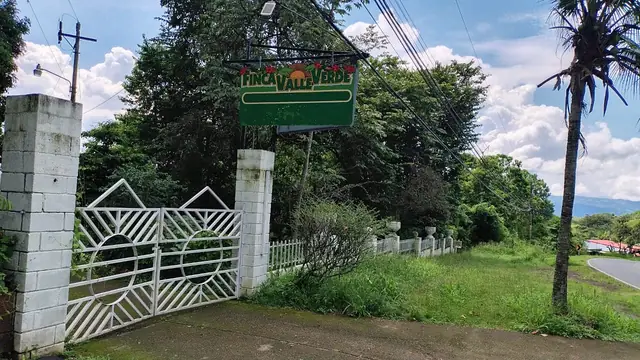
Ask for a certificate showing that municipal taxes are paid up to date before you close. At Finca Valle Verde, each lot comes with that certificate along with its title and survey plan, and your lawyer can confirm it independently.
The luxury home tax, once you build
A separate national tax, the Impuesto Solidario (Ley 8683), applies every year to homes whose value exceeds a threshold that Hacienda updates by decree. It concerns houses, not bare land. If you plan a large home, ask your lawyer or accountant whether it will cross the threshold for the year you finish building.
Residency incentives under Ley 9996
Ley 9996, which took effect in July 2021, created incentives for people approved as pensionados, rentistas or investors, including a partial exemption from the transfer tax, according to the Costa Rica Tourism Board. Those incentives were tied to a five-year window after the law took effect, so ask your lawyer whether any of them still applies to you. Our pensionado residency guide explains the categories.
How closing works, step by step
- Get a written estimate from the notary listing each tax, fee and stamp.
- Check the property at the Registro Nacional: title, survey plan (plano catastrado), liens and municipal tax status.
- Sign the deed before the notary, who collects the taxes and fees.
- The notary files the deed with the Registro Nacional and pays everything due.
- Confirm the registration: the Registry should show you as the owner. Keep a certified copy.
- Register with the municipality for property tax and declare the value.
For the full buying process, see buying land in Costa Rica, step by step, or browse the lots at Valle Verde.
Sources
- Ley 6999, Impuesto sobre Traspasos de Bienes Inmuebles (SCIJ)
- Ley 7509, Impuesto sobre Bienes Inmuebles (SCIJ)
- Registro Nacional: deed taxes and stamps (Registro Inmobiliario)
- Colegio de Abogados y Abogadas: Arancel, Decreto 41457-JP
- Ley 8683, Impuesto Solidario (SCIJ)
- Instituto Costarricense de Turismo: Ley 9996
Last reviewed 2026-11-18.