
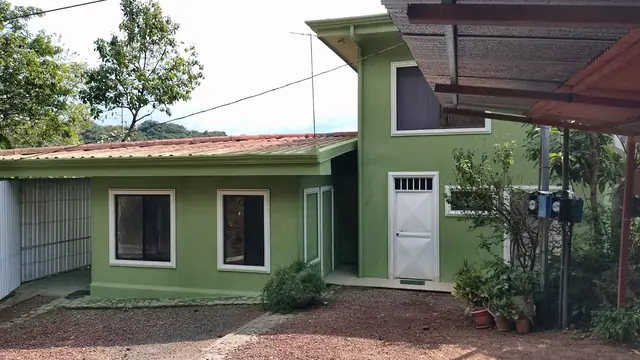
Start with a long visit
US citizens do not need a visa to visit Costa Rica as tourists. The immigration officer decides how long you may stay when you arrive, up to the maximum set in Costa Rica's visa guidelines, currently 180 days for the countries that enter without a visa. Do not assume you will get the maximum, and keep a return or onward ticket. A long visit is the best way to test the climate, the roads and the town before you commit to anything.
Choose a residency path
To live in Costa Rica you need a residency status. The General Law of Migration (Law 8764) lists the temporary-residence categories in Article 79. The three most used by people moving from the US are these:
| Category | Who it fits | What you prove |
|---|---|---|
| Pensionado | Retirees with a lifetime pension, such as Social Security | A pension above the monthly minimum set by law |
| Rentista | People with stable income that is not a pension | Stable monthly income above the legal minimum |
| Inversionista | People who invest in Costa Rica, including real estate | An investment above the legal minimum |
The current amounts and document lists are published by the Dirección General de Migración y Extranjería. Its checklists include documents such as a birth certificate and a criminal record certificate, apostilled in the US. Temporary residence is granted for up to two years and renewed; after three consecutive years you can apply for permanent residence (Article 78). For the retiree route in detail, read our pensionado residency guide.
Health coverage
Costa Rica requires residents to be insured with the CCSS, the public health system. Article 7 of Law 8764 makes CCSS coverage a basic requirement of every residency procedure, and Article 78 requires permanent residents to show continuous coverage when they renew. The CCSS offers voluntary insurance that pensioners and rentistas can join.
On the US side, Medicare usually does not cover health care outside the United States, with limited exceptions. Some people keep their Medicare for trips home and combine CCSS coverage with private insurance in Costa Rica. Make that decision before you move, not after a hospital visit.
Money: income, taxes and banking
- Social Security. Costa Rica appears on the Social Security Administration's country list of places where US citizens can keep receiving payments while abroad (dependents and survivors have extra conditions). Confirm your case with the SSA before you move.
- US taxes. The IRS explains that US citizens abroad are taxed on worldwide income and must report foreign financial accounts above the threshold on the FBAR form. Moving does not end your US filing.
- Banking. Costa Rican banks must identify their clients and document the source of funds under the anti-money-laundering law (Law 7786). Bring bank statements and expect questions; it is routine.
- Incentives. Law 9996 gave pensionados, rentistas and investors import and tax benefits, but only to those who applied in its first five years from 14 July 2021. Ask a lawyer whether any newer rule applies to you.
Bringing your belongings and family
Decide early what you will ship and what you will buy in Costa Rica. Law 9996 gave pensionados, rentistas and investors a one-time duty exemption on household goods and up to two vehicles, but only for those who applied within its five-year window; if you applied later, budget for import taxes. The same law let beneficiaries include their dependents in their applications for migration purposes.
A spouse and first-degree relatives can also qualify for permanent residence after three consecutive years of temporary residence (Law 8764, Article 78). Each family member needs their own apostilled documents and their own CCSS coverage, so start gathering papers for everyone at the same time.
Language and daily life
Government offices, the CCSS, banks and most local services work in Spanish. You can live in Costa Rica with basic Spanish, but every step of the move gets easier with it, from immigration appointments to talking with a builder. Start classes before you arrive, and ask for translations of any document you sign.
Rent first, then buy
Most people who move well rent for a season before they buy. When you are ready, the good news is that buying is open to you: Article 19 of the Constitution gives foreigners the same individual rights as Costa Ricans, so you can own titled land in your own name, with or without residency. The steps are in buying land in Costa Rica, step by step. The transfer tax is 1.5% (Law 6999) and the yearly property tax is 0.25% of the registered value (Law 7509).
Where to live
Many Americans choose the Central Valley for its climate and its access to hospitals and the international airport. Atenas, on the western side of the valley, is described by the national weather service as having a dry climate with a marked Pacific influence. From Concepción de Atenas it is about 21 to 31 minutes to Juan Santamaría airport (SJO), 19 to 33 minutes to the CCSS Hospital San Rafael de Alajuela and 34 to 40 minutes to downtown San José, without traffic.
That is where Finca Valle Verde offers seven titled lots, each with its own registered survey plan, sold directly by the founding family. See the lots if you are thinking of building your own home.
Your moving checklist
- Visit for several weeks, ideally in both seasons.
- Pick a residency category and confirm the current requirements on the immigration office website.
- Order and apostille your birth certificate, criminal record and income documents.
- Plan health coverage: CCSS, private insurance and what to do with Medicare.
- Set up how you will receive Social Security and other income in Costa Rica.
- Talk to a US tax adviser about worldwide income and FBAR reporting.
- Rent first; buy or build once you know the area.
- Hire a Costa Rican lawyer for residency and, separately, for any purchase.
Sources
- Dirección General de Migración y Extranjería: visas
- Dirección General de Migración y Extranjería: residency procedures
- Law 8764, General Law of Migration, Articles 7, 78 and 79 (SCIJ)
- CCSS: insurance options, including voluntary insurance
- Medicare: travel outside the U.S.
- Social Security Administration: payments abroad, country list
- IRS: U.S. citizens and resident aliens abroad
- Law 7786, anti-money-laundering law (SCIJ)
- Law 9996, attraction of investors, rentistas and pensionados (SCIJ)
- Political Constitution, Article 19 (SCIJ)
- IMN: Climate of the Central Valley (PDF)
Last reviewed 2026-11-18.