
The short answer
Costa Rica and Panama are both stable, welcoming places to retire, and neither one is right for everyone. In International Living's 2026 Global Retirement Index, Panama placed second and Costa Rica third, as reported by The Tico Times. With scores that close, the decision usually comes down to three personal questions: what weather you want to live in every day, how you plan to use health care, and how you feel about each country's residency rules. This guide compares those points with official sources from both governments, so you can check every detail yourself.
Side-by-side comparison
| Topic | Costa Rica | Panama |
|---|---|---|
| Retiree residency | Pensionado: temporary residence, renewed with Migración | Jubilado/pensionado permit, described by Panama's immigration service as indefinite, with no renewal needed |
| Income rule | A minimum monthly lifetime pension set by law; current amount on Migración's site | A minimum monthly lifetime pension set by regulation; spouses may combine pensions |
| Climate near the main airport | Juan Santamaría station (IMN, 2010–2025): average highs 31.2 °C (88 °F), average lows 16.7 °C (62 °F) | Tocumen station (IMHPA, 1977–2010): annual average 27.3 °C (81 °F), average humidity 75.7 % |
| Dry season | December to March | January to mid-April |
| Rain per year | About 1,975 mm | About 1,917 mm |
| Public health system | CCSS; residents enroll and must stay current to renew | Caja de Seguro Social (CSS) |
| International Living 2026 | 3rd | 2nd |
Residency for retirees
Both countries offer a pensionado category for people with a guaranteed lifetime pension, but the structure differs. Panama's Servicio Nacional de Migración publishes its retiree permit requirements under Article 200 of its immigration regulation. The permit is indefinite and needs no extension, a married couple may add both pensions together to reach the minimum, and the minimum is lower for applicants who own Panamanian real estate above a set value. The checklist includes a police certificate, a health certificate and proof of the pension.
In Costa Rica, the pensionado category is a temporary residence handled by the Dirección General de Migración y Extranjería. Foreign documents such as police and birth certificates must be legalized or apostilled. Residents renew their DIMEX card periodically, and Migración's renewal checklist includes proof of enrollment in the CCSS. Our pensionado residency guide walks through the steps.
Minimum amounts and checklists change in both countries. Confirm them on the official pages or with an immigration lawyer before you apply.
Climate: spring-like valley or tropical lowland
For many retirees this is the deciding factor. Panama's weather service, IMHPA, describes Panama City's climate as rainy from May to December, with a dry season from January to mid-April. Temperatures stay warm day and night, ranging on average between 20.8 °C and 33.9 °C (69 °F to 93 °F), with average humidity of 75.7 %.
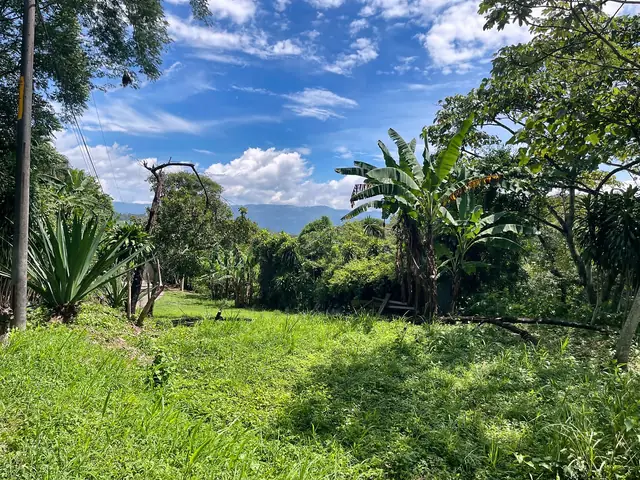
Costa Rica's Central Valley sits higher. At the Juan Santamaría airport station, the closest official reference to Atenas, IMN recorded average lows of 16.7 °C (62 °F) from 2010 to 2025. The national weather service describes the lower western Central Valley, including Atenas and La Garita, as dry, with a marked Pacific influence. Cooler nights are the clearest difference from lowland Panama.
To be fair, Panama also has cooler highland towns, and Costa Rica has hot, humid coasts. If climate drives your choice, compare specific towns, not whole countries. Our guide to retiring in Atenas covers one Central Valley option in detail.
Health care
Both countries combine a public social security system with private hospitals. In Costa Rica, legal residents join the CCSS (Caja Costarricense de Seguro Social) and pay a monthly contribution; Migración checks that this insurance is current when you renew residency. The CCSS runs regional hospitals such as Hospital San Rafael in Alajuela, the closest public hospital to Atenas. In Panama, the public system is run by the Caja de Seguro Social (CSS); how a foreign retiree can use it depends on their status, so ask a Panamanian adviser. In both countries, many retirees also carry private insurance.
Owning land
Costa Rica's Constitution (Article 19) gives foreigners the same individual and social rights as Costa Ricans, with the exceptions set by law. In practice you can hold titled land in your own name, and you can check any title and its liens in the Registro Nacional before you sign. Coastal land follows special rules; inland land does not. See Can foreigners buy land in Costa Rica?
Foreigners can also own property in Panama; its retiree permit even refers to applicants who own real estate there. Panama has its own rules for coastal, island and border land, which a Panamanian lawyer should confirm.
How to decide
- Spend at least two weeks in each country, ideally one visit in the dry season and one in the rainy season.
- Read both countries' retiree requirements on the official pages and ask a lawyer which one fits your pension.
- Visit the public hospital and a private clinic nearest the area you like.
- Check land titles in the public registry before you make an offer.
If the Central Valley is on your list, you can see what large titled lots look like near Atenas on our lots page, including the seven lots at Finca Valle Verde, about 21–31 minutes from SJO airport.
Sources
- The Tico Times: Costa Rica in the Global Retirement Index 2026
- Servicio Nacional de Migración de Panamá: requisitos para jubilado pensionado (PRP-JP)
- Dirección General de Migración y Extranjería (Costa Rica): Regularización
- Dirección General de Migración y Extranjería (Costa Rica): DIMEX
- IMN: Clima del Valle Central
- IMHPA (Panamá): Caracterización del clima en el distrito de Panamá
- CCSS: Hospitales
- Constitución Política de Costa Rica (SCIJ)
- Registro Nacional de Costa Rica
Last reviewed 2026-11-18.